
Table of Contents
- AI Integration in Recruitment
- Emphasis on Soft Skills
- Rise of Remote Work
- Gig Economy and Freelance Talent
- Data-Driven Hiring Strategies
- Focus on Employee Experience
- Conclusion
As the workforce undergoes its most rapid transformation in decades, organizations face new challenges and opportunities in talent acquisition. Staying abreast of these trends is vital for companies striving to attract top candidates in a competitive market. From the integration of advanced technologies in the hiring process to new expectations around workplace flexibility, modern talent acquisition is about proactive adaptation. Understanding hiring acquisitionis crucial for HR teams aiming to stay ahead of the curve and foster environments where both employees and employers can thrive.
Today, recruitment leaders must strike a balance between innovative technologies and a focus on the human elements that drive engagement and retention. Navigating these shifts can be complex, but those who adapt successfully will not only secure the best candidates but also build a sustainable workforce for the future.
Alongside technology’s influence, other shifts—such as the value of soft skills and the growing popularity of remote work—are changing both candidate expectations and the strategies employed by recruitment teams. Successful organizations are learning to leverage these changes for greater agility and long-term growth.
With the expanding gig economy and an increasingly globalized search for talent, traditional hiring strategies are being replaced by flexible models that suit a modern workforce. Strategic investment in employee experience and data-driven practices is also reshaping organizational cultures in meaningful ways.
AI Integration in Recruitment
Artificial Intelligence (AI) is fundamentally transforming how companies approach recruitment. By automating time-consuming tasks such as resume parsing and scheduling, AI allows recruiters to focus on building relationships with top candidates. Advanced tools are not only accelerating the hiring process—they’re improving accuracy in matching candidate skills with job requirements. The result is a more efficient recruitment pipeline, reduced bias in decision-making, and a better overall experience for candidates.
Despite these benefits, a balanced approach is essential. Technology, while powerful, cannot replace the value that skilled recruiters bring to candidate engagement and human judgment. Combining automated systems with authentic, personalized outreach is crucial to fostering strong candidate relationships and enhancing offer acceptance rates. For a deeper look at this trend, visit Forbes.
Emphasis on Soft Skills
The rise of automation and remote work has brought soft skills such as communication, adaptability, and teamwork to the forefront. Employers now recognize that these core traits are essential for long-term success, particularly in rapidly changing and collaborative work environments. Modern recruitment practices are adapting by prioritizing behavioral interviews, scenario-based assessments, and other tools that help employers gauge these qualities early in the hiring process.
This shift also aligns hiring more closely with an organization’s core values and culture, which is vital for fostering employee engagement and reducing turnover. Recruiters are encouraged to create hiring processes that look beyond formal credentials and identify candidates who will thrive in diverse teams and ambiguous, evolving job roles.
Rise of Remote Work
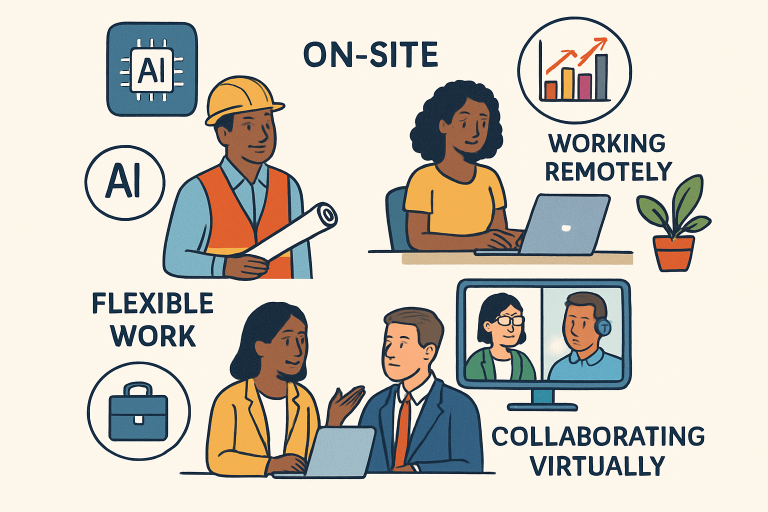
The transition to remote and hybrid work models has fundamentally altered how organizations approach talent acquisition. Employers are no longer limited to their local talent pool, giving them access to candidates with a diverse range of experiences and skill sets. As a result, highly skilled professionals are weighing an employer’s approach to flexibility and remote work opportunities when considering job offers.
Organizations that offer meaningful remote options report greater success in attracting top talent and maintaining higher job satisfaction. However, building a productive distributed workforce comes with new challenges, such as fostering collaboration across time zones and maintaining a strong organizational culture. HR leaders must invest in virtual engagement strategies and rethink their onboarding processes to ensure remote hires integrate smoothly. For insights regarding the future of workplace flexibility, review this CNBC article.
Gig Economy and Freelance Talent
The growth of the gig economy is prompting organizations to rethink their team structures and workforce management. Many businesses now rely on a blend of full-time employees, freelancers, and contract workers to maintain agility and scale. This flexible model enables companies to access specialized expertise on an as-needed basis, delivering project-based results while controlling costs.
However, a mixed workforce requires more transparent processes for onboarding, collaborating, and managing short-term contributors. Compliance, benefits administration, and engagement strategies for non-traditional workers are now essential. Talent leaders are using dedicated platforms and partnership networks to manage freelancers efficiently, building networks that contribute to long-term business resilience.
Data-Driven Hiring Strategies
Modern talent acquisition is grounded in data-driven decision-making. Analytics tools enable HR professionals to track key metrics, including time-to-hire, quality-of-hire, candidate source effectiveness, and turnover rates. With these insights, teams can quickly identify gaps, adapt recruitment strategies to meet evolving needs, and more accurately forecast workforce requirements.
Data-driven approaches are also enhancing diversity initiatives and compliance efforts, as organizations use metrics to monitor progress and make evidence-based adjustments to hiring campaigns. Ultimately, the integration of analytics ensures that recruitment practices remain aligned with both short- and long-term business goals. For an industry perspective, see Harvard Business Review.
Focus on Employee Experience
Investing in employee experience starts before the first day on the job. Transparent, personalized recruitment and onboarding processes contribute significantly to a company’s reputation and retention rates. Leading organizations are leveraging feedback mechanisms and technology to provide candidates with clear communication, meaningful touchpoints, and opportunities for professional growth as part of the hiring process.
Companies that make engagement and well-being a part of their acquisition strategy experience lower attrition and higher productivity. Initiatives such as mentorship programs, tailored career paths, and ongoing development demonstrate to candidates—from their very first interactions—that they’re valued as individuals, not just as potential hires.
Conclusion
Staying ahead in talent acquisition means keeping pace with technological innovations, embracing workforce flexibility, and placing renewed emphasis on the qualities that make employees thrive. By integrating AI into recruitment, prioritizing soft skills, offering flexible work options, adopting blended workforce models, and harnessing data for decision-making, organizations will not only attract the best talent—they’ll also foster the environments where that talent can flourish in a rapidly changing world.